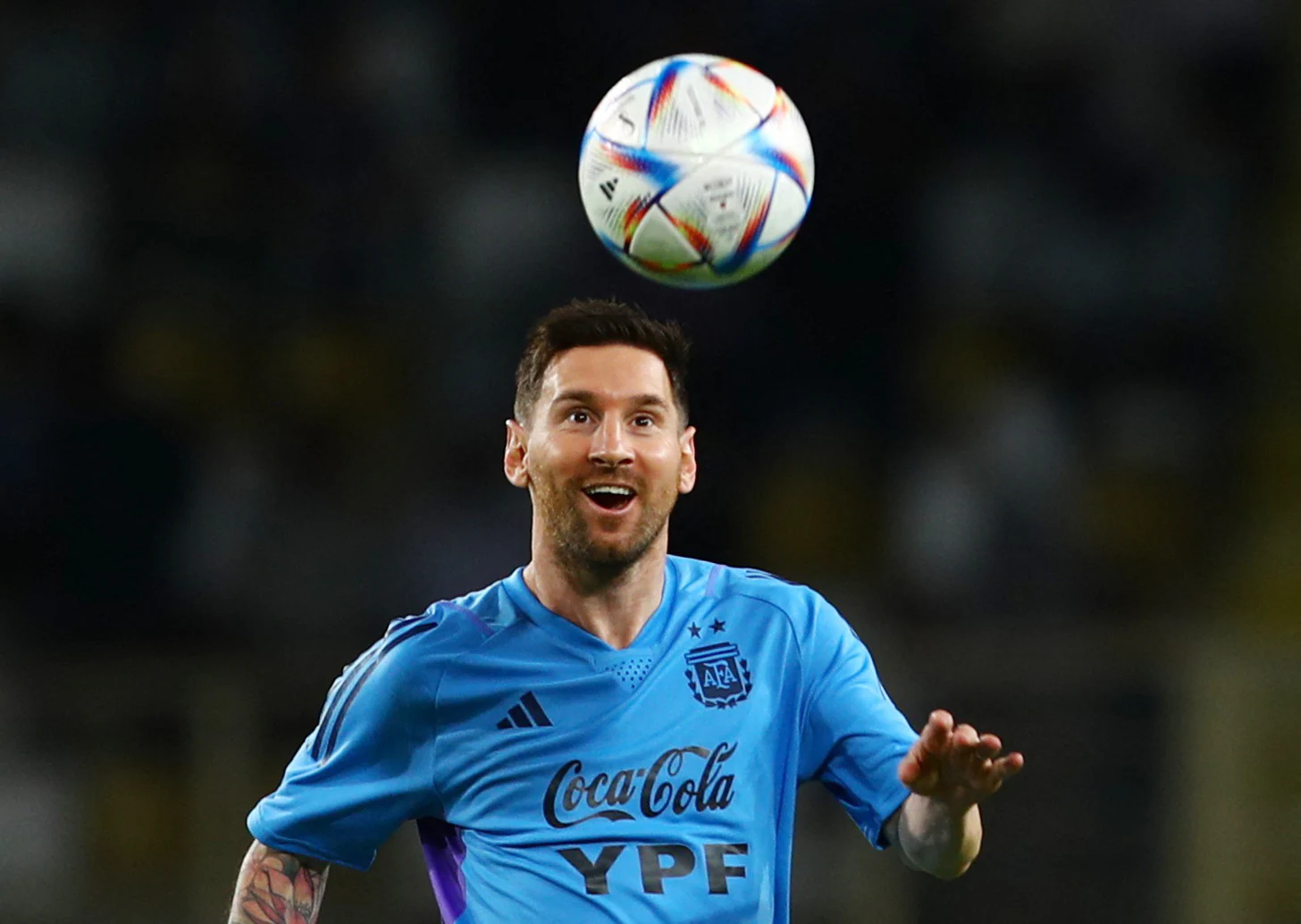
Lionel Andrés Messi is not just a soccer player; he is a phenomenon who reshaped how the world understands football greatness. For nearly two decades, Messi has stood at the summit of the sport, blending extraordinary talent, relentless consistency, and a quiet humility that contrasts sharply with his global fame. From the narrow streets of Rosario, Argentina, to the biggest stadiums in the world, Messi’s journey is a story of perseverance, brilliance, and an unbreakable bond with the game.
This article explores Lionel Messi’s life, career, playing style, achievements, challenges, and lasting legacy in world football.
Early Life and Childhood in Argentina
Lionel Messi was born on June 24, 1987, in Rosario, a working-class city in Argentina known for its deep football culture. From a very young age, Messi showed an unusual connection with the ball. His family recalls that football was not just a hobby for him—it was instinctive.
At the age of five, Messi began playing for Grandoli, a local club coached by his father. His small stature did not limit his impact; instead, it enhanced his agility and control. By the time he joined Newell’s Old Boys, one of Rosario’s most respected youth academies, Messi was already considered exceptional.
However, his path was far from easy. At age 10, Messi was diagnosed with a growth hormone deficiency, a condition that required expensive medical treatment. For many families, this would have ended the dream. But fate intervened.
Move to Barcelona and Life-Changing Opportunity
In 2000, Messi’s life changed forever when FC Barcelona offered to pay for his medical treatment and bring him to Spain. At just 13 years old, Messi moved thousands of miles away from home, leaving behind his family, friends, and familiar surroundings.
Barcelona’s famous La Masia academy became Messi’s new home. There, his talent flourished rapidly. Coaches were stunned by his ball control, vision, and decision-making, even when competing against older players. His technical ability seemed effortless, almost natural.
In 2004, Messi made his official debut for Barcelona’s first team at just 17 years old. It was clear to everyone watching that football was witnessing the rise of something special.
Rise to Stardom at FC Barcelona
Messi’s early years at Barcelona coincided with the club’s golden era. Playing alongside legends such as Ronaldinho, Xavi, and Andrés Iniesta, Messi evolved from a promising youngster into the team’s centerpiece.
Under manager Pep Guardiola, Messi reached a new level. Guardiola repositioned him as a “false nine,” a tactical move that allowed Messi to drop deep, create chances, and score freely. This role revolutionized modern football and changed how attackers were used across the world.
Season after season, Messi broke records:
- He became Barcelona’s all-time top scorer
- He scored an unprecedented number of goals in a calendar year
- He delivered countless assists, proving he was as much a creator as a scorer
His understanding with teammates was almost telepathic, and his influence on Barcelona’s playing style was absolute.
Unmatched Playing Style and Skillset
What truly separates Messi from other great players is not just his statistics but how he plays the game.
Messi’s dribbling is widely regarded as the best in football history. His low center of gravity allows him to change direction instantly, glide past defenders, and maintain complete control at high speed. Unlike many attackers, Messi rarely relies on physical strength; his intelligence and balance do the work.
His vision and passing ability are equally remarkable. Messi sees opportunities before they appear, delivering perfectly weighted passes that split defenses. Whether it is a short combination play or a long, precise through ball, his decision-making is consistently elite.
Additionally, Messi’s finishing is clinical. He scores with both feet, excels in one-on-one situations, and is deadly from free kicks. Over the years, he transformed into a complete forward who could dominate matches in multiple ways.
Individual Achievements and Records
Lionel Messi’s list of achievements is one of the most impressive in sports history. Over his career, he has accumulated:
- Multiple Ballon d’Or awards
- Numerous Golden Boots for top goal scorer
- Hundreds of goals and assists across club competitions
- Records for most goals in a season and a calendar year
Beyond the numbers, Messi consistently delivered in crucial moments—league deciders, cup finals, and high-pressure matches. His performances were not just about volume but about impact.
What makes his achievements even more remarkable is his consistency. While many players experience peaks and declines, Messi maintained an elite level for over 15 years.
Struggles and Redemption with Argentina
Despite his club success, Messi’s international career was once marked by heartbreak. Playing for Argentina came with immense pressure, as fans constantly compared him to the legendary Diego Maradona.
Argentina reached several finals during Messi’s early international career, including Copa América and World Cup finals, but fell short each time. Messi faced harsh criticism, with some questioning his leadership and commitment.
In 2016, after another painful final defeat, Messi announced his retirement from international football. It was a moment of deep emotional exhaustion. However, the love for his country brought him back.
The turning point came in later years, when Messi led Argentina with maturity and calm leadership. He guided the team to major international success, silencing critics and completing his football story with national glory.
Leadership and Personality
Messi’s leadership style is unique. He is not loud or confrontational; instead, he leads by example. His dedication to training, discipline on the pitch, and respect for teammates set the standard.
Unlike many global superstars, Messi avoids controversy and media drama. He lets his performances speak for him. This humility has earned him admiration from fans, players, and coaches across the world.
His calm demeanor also brings balance to teams, especially in high-pressure situations. When Messi has the ball, teammates feel confidence and assurance.
New Chapter Beyond Barcelona
After spending the majority of his career at Barcelona, Messi began a new phase that showcased his adaptability. Leaving the club where he became a legend was emotionally difficult, but it demonstrated his professionalism and love for the game.
In this phase, Messi continued to perform at the highest level, proving that his greatness was not limited to one system or one league. He adapted to new teammates, environments, and expectations while maintaining elite performance.
This stage of his career reinforced the idea that Messi’s talent is timeless.
Influence on Global Football Culture
Lionel Messi’s influence extends far beyond goals and trophies. He inspired an entire generation of players to focus on technique, creativity, and intelligence rather than physical dominance.
Young footballers across the world try to imitate his dribbling style, movement, and close control. Coaches design systems that emphasize possession and fluid attacking play because of the blueprint Messi helped perfect.
Commercially, Messi became one of the most recognizable athletes in history. Yet, despite global fame, he remained grounded, prioritizing football and family over celebrity culture.
Legacy and Place in Football History
The debate about the greatest footballer of all time will continue forever, but Lionel Messi’s place among the legends is unquestionable. His career is defined not only by success but by beauty—the way he made football look effortless and joyful.
Messi showed that greatness does not require arrogance or physical dominance. Intelligence, creativity, discipline, and passion can be just as powerful.
As his playing career progresses toward its final chapters, his legacy is already secure. Messi will be remembered as a player who elevated football into an art form and inspired millions around the globe.
Conclusion
Lionel Messi’s story is one of talent meeting perseverance. From a young boy facing medical challenges to a global football icon, his journey represents what is possible when passion and dedication align.
More than trophies or records, Messi’s greatest contribution to football is the way he made people feel while watching the game. Every touch, every dribble, and every goal reminded fans why they fell in love with football in the first place.
Lionel Messi is not just a soccer player—he is a symbol of excellence, humility, and the pure joy of the beautiful game.