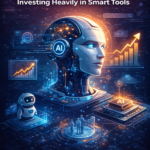
In recent years, artificial intelligence (AI) has shifted from an experimental technology to a central pillar of digital transformation. Tech companies—whether large global enterprises or emerging startups—are increasingly prioritizing AI tools in their strategies, product development, customer solutions, and long-term growth plans. This dramatic shift is not just a trend; it reflects a broader evolution in how technology is built, optimized, and delivered in a hyper-competitive digital world.
This article explores why AI has become the core focus for tech companies, highlighting the driving factors, benefits, market trends, challenges, and how AI is shaping the future of global innovation.
1. The Rapid Advancement of AI Technology
One primary reason tech companies are focusing more on AI tools is the unprecedented speed at which AI technologies are advancing. Machine learning, deep learning, natural language processing (NLP), and computer vision have matured significantly, allowing businesses to solve problems that were previously impossible or too costly.
AI models can now:
- Understand human language with high accuracy
- Analyze massive datasets in seconds
- Predict outcomes with reliable precision
- Recognize images, patterns, and behaviors
- Automate tasks that required human intelligence
This progress has made AI far more accessible and valuable. Ten years ago, AI required high-end hardware and a team of PhD-level researchers. Today, thanks to cloud computing and pre-built AI frameworks, companies can implement AI solutions quickly and affordably. As a result, more tech companies are turning AI from a “future plan” into a foundational capability.
2. Data Has Become the New Currency
Modern businesses generate unimaginable amounts of data—customer behavior, website analytics, sales patterns, conversations, and machine logs. Tech companies have recognized that data is only useful when analyzed efficiently, and this is where AI tools excel.
AI transforms raw data into:
- Actionable insights
- Predictive analytics
- Behavior forecasting
- Real-time recommendations
For example:
- E-commerce platforms use AI to recommend products based on browsing habits.
- FinTech companies use AI to detect fraud within milliseconds.
- Healthcare tech solutions use AI to predict potential diseases early.
Without AI, companies struggle to keep up with the volume and complexity of data flowing into their systems. Therefore, leveraging AI tools is the only way to maximize the value of big data.
3. The Demand for Automation Is Rising
Automation is no longer optional; it’s essential. Tech companies are increasingly adopting AI-powered automation tools to:
- Reduce operational costs
- Improve accuracy
- Increase productivity
- Minimize manual errors
- Enhance speed and efficiency
AI-driven automation goes beyond traditional scripts. It includes:
- Chatbots that handle customer service
- AI assistants that streamline workflows
- Robotic process automation (RPA) to optimize repetitive tasks
- Smart scheduling and resource planning systems
In competitive markets, companies that automate effectively outperform those relying solely on manual operations. This makes AI tools a critical part of business sustainability.
4. AI Enhances Customer Experience and Personalization
Today’s customers expect personalized, fast, and convenient digital experiences. Tech companies use AI tools to meet these expectations by leveraging machine learning and behavior analysis.
AI enables:
- Personalized content recommendations
- Dynamic pricing adjustments
- Custom marketing campaigns
- AI chat support available 24/7
- Intelligent voice assistants
- Sentiment analysis for improved engagement
Companies like Amazon, Netflix, Spotify, and Google have built entire business models on personalization powered by AI. This leads to higher conversions, improved loyalty, and stronger customer satisfaction.
5. Competitive Pressure Is Pushing AI Adoption
The tech world moves at breakneck speed. When one major company adopts an innovative AI solution, others follow to maintain competitiveness.
Key examples:
- Cloud service providers integrate AI for smarter cloud computing
- Cybersecurity firms use AI to detect evolving threats
- Social media platforms use AI for content recommendation and moderation
- SaaS companies embed AI features to stay ahead of their competitors
AI has become a baseline requirement—not an extra feature. Companies that ignore AI risk falling behind the competition and losing market relevance.
6. AI Reduces Costs and Increases Profitability
Tech companies aim to balance innovation with profitability. AI tools help achieve this by:
- Reducing human resource costs
- Streamlining product development
- Automating customer support
- Optimizing marketing strategies
- Improving quality control
- Predicting market trends
By integrating AI, companies can maintain better financial management while continuing to innovate. For example, predictive maintenance powered by AI saves manufacturing firms millions by identifying machine issues before they become failures.
7. The Rise of AI in Cybersecurity
Cyber threats are expanding rapidly, and traditional security systems cannot keep up. AI tools allow tech companies to strengthen cybersecurity by:
- Detecting suspicious behavior in real time
- Identifying potential threats before attacks happen
- Responding instantly to risk signals
- Analyzing massive security logs
Given the growing complexity of cyber-attacks, many tech firms now depend on AI to safeguard their systems, data, and customers.
8. AI Enables Faster and Smarter Product Development
Tech companies use AI to speed up innovation. AI tools help:
- Prototype software quickly
- Optimize testing through automation
- Improve UI/UX using behavior analytics
- Generate code assistance (e.g., GitHub Copilot, ChatGPT)
- Predict product performance in various markets
This significantly reduces time-to-market, helping companies remain agile and competitive.
9. AI Strengthens Remote Work and Collaboration
The shift toward hybrid and remote work models accelerated the need for smart AI tools. From virtual assistants to meeting transcription tools and workflow automation, AI helps teams stay connected and efficient regardless of location.
Examples include:
- AI-powered project management tools
- Virtual meeting assistants
- Automated reporting
- Smart scheduling systems
These innovations support productivity in a distributed workforce, making AI an essential part of modern digital operations.
10. AI Opens New Revenue Streams
Many tech companies are developing AI-based products to generate new income. Examples include:
- AI SaaS tools
- Machine learning APIs
- Cloud-based AI platforms
- AI analytics services
- Robotic automation solutions
AI is not just a support tool—it is becoming a core product offering that drives revenue. This strategic shift motivates companies to invest more heavily in AI development.
11. Government and Enterprise Adoption Is Boosting AI Demand
Governments, enterprises, healthcare organizations, and financial institutions are adopting AI solutions at scale. This creates a massive market opportunity for tech companies.
Large institutions are using AI for:
- Citizen service portals
- Transportation optimization
- Healthcare diagnostics
- Financial forecasting
- Climate impact analysis
As demand grows, tech companies must keep expanding AI capabilities to stay relevant and profitable.
12. AI Supports Sustainable and Scalable Growth
AI is key to achieving sustainable growth because it supports scalability. A process automated through AI can handle unlimited workloads without requiring proportional increases in manpower or resources.
This makes AI ideal for:
- Large-scale cloud operations
- Global e-commerce
- International customer support
- High-volume data processing
Scalability is vital for tech companies expanding rapidly, which is why AI has become central to long-term growth strategies.
Conclusion: AI Is the Future of Technology
The increased focus on AI tools by tech companies is driven by a combination of technological advancements, competitive pressure, customer expectations, and the undeniable benefits AI brings to operations and innovation.
AI is not just transforming how tech companies work—it is reshaping entire industries, from healthcare to finance, entertainment, retail, and beyond. As AI continues to evolve, its importance will only grow, making it the foundation of future digital transformation.
Tech companies that embrace AI today are building the roadmap for tomorrow’s intelligent, automated, and data-driven world.