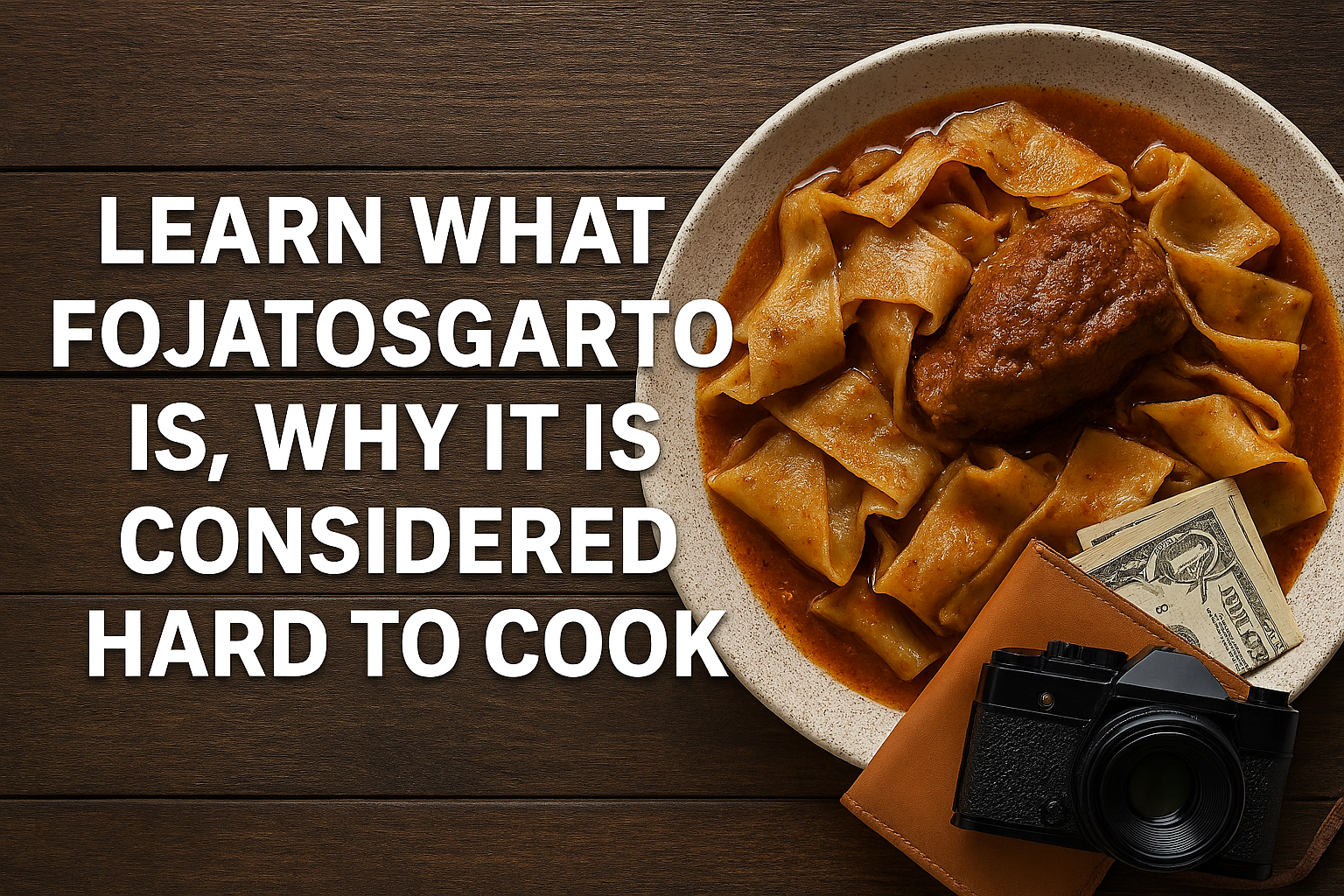
Fojatosgarto is a rare Hungarian delicacy known for its complex preparation and bold flavors
Fojatosgarto is a lesser-known traditional dish that has recently gained attention due to its unique flavor, complex preparation, and reputation for being difficult to cook. While it may not be as widely recognized as other global cuisines, those who have tasted a well-prepared Fojatosgarto often describe it as deeply satisfying and rich in character. However, its cooking process requires patience, precision, and a good understanding of its ingredients, which is why many people find it challenging to prepare successfully.
This article explores what Fojatosgarto is, its key ingredients, cultural background, and the main reasons why it is considered hard to cook, along with tips to make the process easier.
Understanding Fojatosgarto
Fojatosgarto is traditionally known as a slow-cooked, layered dish that combines dense ingredients with carefully controlled heat and timing. It is often prepared for special occasions rather than everyday meals, which adds to its reputation as a “serious cook’s dish.”
The dish is valued for its deep flavors, which develop gradually during the cooking process. Unlike quick or forgiving recipes, Fojatosgarto demands attention at every stage—from ingredient preparation to final serving. Even small mistakes can affect its texture or taste, making experience an important factor in achieving good results.
Key Ingredients Used in Fojatosgarto
One of the reasons Fojatosgarto is difficult to cook lies in the nature of its ingredients. While exact recipes may vary by region or family tradition, the core components usually include:
- Dense base ingredients that require long cooking times
- Aromatic spices or herbs added in precise quantities
- A binding element that holds the dish together
- Liquids or sauces that must reduce slowly without drying out
These ingredients are often simple on their own, but when combined, they require careful balance. Too much heat can cause burning, while too little can result in undercooked or bland food.
Why Fojatosgarto Is Considered Hard to Cook
1. Precise Cooking Time Is Critical
Fojatosgarto does not follow a one-size-fits-all cooking time. The duration depends on ingredient quality, thickness, moisture content, and heat level. Cooking it too fast can ruin the texture, while cooking it too slowly without adjustment can make it mushy or flavorless.
Many beginners struggle because they expect fixed timing, but Fojatosgarto requires constant evaluation rather than strict clock-watching.
2. Heat Control Requires Experience
Maintaining the right temperature is one of the biggest challenges. The dish typically requires low to medium heat for an extended period, and sudden temperature changes can negatively impact the final result.
High heat may cause the outer layers to cook too quickly while leaving the inside underdone. On the other hand, inconsistent heat can prevent proper flavor development.
3. Texture Is Difficult to Perfect
A well-made Fojatosgarto has a very specific texture—neither too dry nor too soft. Achieving this balance is difficult, especially for first-time cooks.
If the liquid content is misjudged, the dish may end up overly dense or falling apart. Because the texture changes gradually during cooking, mistakes are often noticed only near the end, when it’s too late to fix them.
4. Ingredient Preparation Takes Time
Unlike simple recipes where ingredients are added as-is, Fojatosgarto requires careful preparation. This may include soaking, pre-cooking, or precise cutting methods. Skipping or rushing these steps often leads to uneven cooking.
Proper preparation ensures that all components cook at the same rate, which is essential for a dish that relies heavily on balance.
5. Timing of Seasoning Is Crucial
Another challenge is knowing when to add spices and seasoning. Adding them too early can cause flavors to become bitter or overpowering, while adding them too late may prevent the dish from fully absorbing the taste.
Experienced cooks understand how flavors evolve during long cooking periods, but beginners often struggle with this aspect.
Cultural Significance of Fojatosgarto
Fojatosgarto is often associated with tradition and heritage. In many households, the recipe is passed down through generations, with small variations that reflect family preferences.
Because it is time-intensive, it is commonly prepared for gatherings, festivals, or important celebrations. This cultural importance adds pressure for the cook, as expectations are usually high when the dish is served.
Common Mistakes When Cooking Fojatosgarto
Some frequent mistakes include:
- Cooking on high heat to save time
- Adding too much liquid at once
- Skipping resting time after cooking
- Overmixing, which affects texture
- Not tasting and adjusting seasoning gradually
Avoiding these mistakes can significantly improve results, even for beginners.
Tips to Make Fojatosgarto Easier to Cook
If you’re new to cooking Fojatosgarto, these tips can help:
- Start with small portions to practice technique
- Use heavy cookware for even heat distribution
- Monitor moisture levels throughout cooking
- Be patient—rushing almost always leads to poor results
- Take notes on what works and what doesn’t
With practice, the dish becomes more manageable and rewarding to prepare.
Read more – Everything You Need to Know About Fitness Tip of the Day – The Spoon Athletic
Why People Still Love Cooking Fojatosgarto
Despite its difficulty, many cooks enjoy making Fojatosgarto because it teaches valuable skills such as patience, heat control, and flavor balancing. Successfully preparing the dish gives a strong sense of accomplishment and often earns appreciation from others.
For food enthusiasts, the challenge itself is part of the appeal.
Final Thoughts
Fojatosgarto is considered hard to cook because it demands precision, patience, and experience. From ingredient preparation to temperature control and seasoning timing, every step plays a vital role in the final outcome. While it may be intimidating at first, mastering Fojatosgarto can be a rewarding journey for anyone interested in traditional and complex cooking.
With practice, attention to detail, and respect for the process, this challenging dish can become a signature recipe worth the effort.